
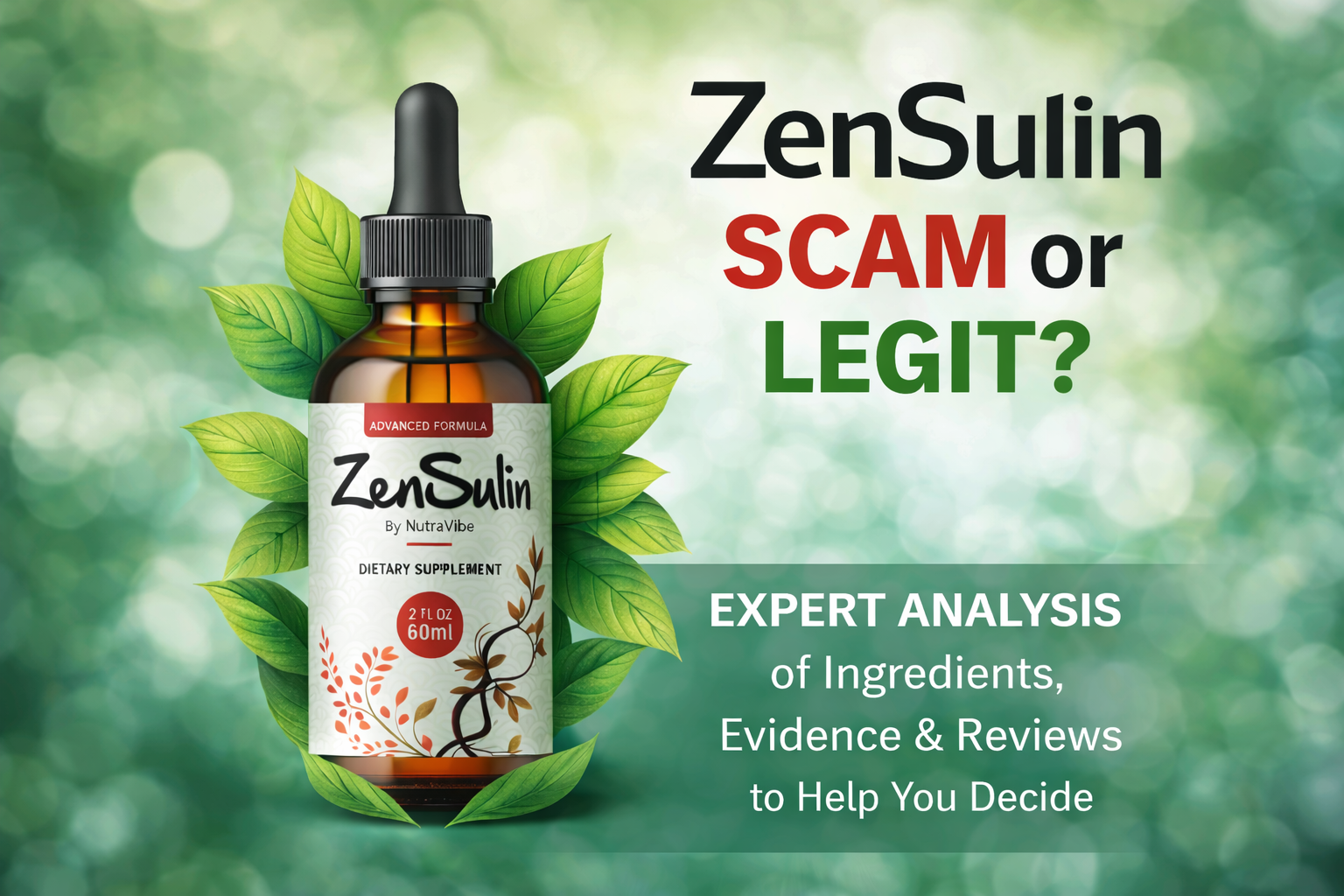
ZenSulin Scam or Legit? Honest 2026 Ingredients, Evidence & Safety Guide
ZenSulin is a liquid “blood sugar support” supplement that contains cinnamon, turmeric/curcumin, and herbs that are similar to gymnema. The FDA has not approved it as a diabetes medication, and no independent clinical trials have confirmed that the whole drug works as claimed. A lot of web ads are like affiliate marketing. Cinnamon, curcumin, and gymnema may lower blood sugar, however the proof is not always clear and depends on the dose. Talk to your doctor before taking ZenSulin, especially if you use medicines that reduce blood sugar. Think of it as a vitamin, not a drug.
What is ZenSulin?
Some listings spell ZenSulin (also known as Zensulin or Zen Sulin) as a liquid drop supplement that is supposed to help with “healthy blood sugar” or “metabolic balance.”
The product and branding pages say that it is a natural herbal formula with plant extracts, spices, and helpful micronutrients in a liquid form that is easy to take.
There are other vendor pages and a “official” sales site that provide discounts, multi-bottle packages, and a money-back guarantee. You can find it on sites like Amazon and on pages that are only for selling.
Important legal/regulatory point:
ZenSulin is not a medicine; it is sold as a dietary supplement. In the US (and places like it), dietary supplements don’t have to be authorized by the FDA for safety or effectiveness before they go on sale. It is up to the manufacturers to make sure that their promises are true and to disclose any bad events.
However, claims that suggest the product treatments or cures disease would be against the law. The DSHEA disclaimer says, “This statement has not been evaluated by the Food and Drug Administration…” So always read the labels.
Ingredients
Different vendor pages show the same basic plants. Some marketing pages don’t show particular formulations or concentrations, however common substances that are listed on product pages and by retailers are:
- Cinnamon (bark or extract) is a common ingredient in supplements that help with blood sugar levels.
- Gymnema sylvestre (or gymnemic derivatives) is a traditional Ayurvedic plant that is said to help with sugar cravings.
- Turmeric/Curcumin is an anti-inflammatory chemical that also has some effects on metabolism.
- Licorice root, coriander, berberine-like plants, chromium, and other minerals can be found on different vendor lists (the specific items on each list may be different).
Be aware that the ingredient lists on different seller pages and affiliate reviews may not always agree. The manufacturer’s label (or the product listing on a controlled retailer like Amazon) is the best place to find out exactly what it is made of. If a seller doesn’t clearly show how much of each ingredient is in a serving and the Supplement Facts panel, that’s a sign of a lack of transparency.
Evidence: do the ingredients work?
Bottom line: Some constituents in ZenSulin have been shown in clinical tests to have small effects on fasting glucose/HbA1c or other metabolic markers. However, the evidence is varied, depends on the dose, extract standardization, and duration, and is not as strong as that of pharmaceutical medications. Studies of single ingredients do not demonstrate the efficacy of a multi-ingredient solution.
Below I summarize the evidence for the most commonly cited ingredients.
Cinnamon
Numerous randomized controlled studies and meta-analyses have assessed cinnamon in individuals with type 2 diabetes or prediabetes. Multiple meta-analyses indicate minor yet statistically significant decreases in fasting blood glucose and HbA1c compared to placebo; nevertheless, the results exhibit heterogeneity because to variations in cinnamon species, dosages, and trial quality. Some research indicate no effect. Cinnamon can be helpful as an extra measure, but it shouldn’t be used instead of prescription therapy.
Gymnema sylvestre
Preclinical investigations and certain clinical trials have shown that gymnema extracts can lower fasting glucose levels, increase insulin production, and lower sugar cravings. But trials are generally tiny and the dose and extract quality can be different. More big, well-controlled human trials are needed to be sure that the benefits are always there and that the doses are safe.
Curcumin with turmeric
Systematic reviews and meta-analyses indicate that curcumin or turmeric extracts can somewhat reduce fasting glucose and HbA1c levels, as well as enhance indicators such as HOMA-IR in individuals with metabolic disorders; nevertheless, challenges related to heterogeneity and dosage/formulation persist. A typical problem is bioavailability (absorption). Many studies used curcumin formulations with added piperine (black pepper extract) or other substances that help absorption.
Other constituents include chromium, berberine, licorice, and coriander.
Chromium: Some meta-analyses indicate a little advantage for glucose regulation in persons with chromium deficiency; nonetheless, the overall findings are inconsistent.
Berberine (if included in a formulation) : has clinical data demonstrating glucose-lowering effects comparable to metformin in certain trials; nevertheless, quality and uniformity are crucial.
Licorice and coriander are traditional herbs that are good for your digestion or have antioxidant properties. There isn’t much clinical research to support their use for decreasing blood sugar directly.
Important scientific note: the clinical benefit relies on the amount, the standardization of the extract, and how long it lasts. Small doses or poorly standardized extracts are much less likely to give the same advantages as trials that employed therapeutic levels and standardized preparations.
Is there independent clinical research on ZenSulin itself?
I looked through clinical trial registries, peer-reviewed journals, and regulatory databases but couldn’t discover any independent clinical trials or peer-reviewed research that tested ZenSulin as a finished product.
Investigative articles and websites that protect consumers have pointed out that there is no formal clinical proof, independent lab testing, or FDA filings for the substance as a treatment. The absence of independent evidence does not inherently indicate that the product is false; but, assertions of “clinically tested” (when utilized by merchants) should be regarded with skepticism unless the trial is both connected and publicly accessible.
Reviews: what are real users saying
Marketplaces (Amazon, retailer pages): There are a lot of good reviews for ZenSulin-style products on Amazon. But seeing hundreds of near-perfect five-star ratings in a short amount of time is a typical clue that you should check the reviews’ legitimacy. Look for reviewer histories that don’t change, verified purchase badges, and feedback that is balanced (with both good and poor points).
Affiliate and review sites: There are a lot of article pages and videos that appear like reviews but are actually affiliate pages (they get money when people buy things). These pages often make the same claims and use the same testimonials again and over again. Don’t take them as impartial reviews; instead, see them as ads.
Consumer complaints and fraud alerts: The ZenSulin marketing funnel has been identified by a number of blog posts and scam-watch pages for pushing too many upsells, making it hard to cancel memberships, and having phony reviews. Even though these reports aren’t official proof of fraud, you should be careful and do extra checks (such keeping an eye on your credit card and looking over the return policy) if you get more than one.
To swiftly judge reviews, look at the review chronology (a sudden explosion), the profiles of the reviewers (single review accounts), the language used in the reviews, and independent sources like Reddit or consumer forums for honest experiences. The FTC and nonprofits that protect consumers give advice on how to recognize bogus reviews.
ZenSulin Scam red flags commonly associated with supplement funnels
When you want to know if a product is real, look for:
- The sales site doesn’t have a clear Supplement Facts label. If the exact numbers per serving aren’t there, that’s a problem with transparency.
- “Limited time” countdowns and aggressive upsells (buy one get many offers) are common in high-pressure marketing.
- Subscriptions that are hard to cancel and charges that happen again and again—check the terms and conditions. If users complain about getting charged for things they didn’t expect, take it as a caution.
- Claims that the product “reverses diabetes” or “replaces insulin” are too good to be true and are against the law and not safe for health. Real supplements don’t make claims about treating diseases.
- There is no independent third-party testing stated (USP, NSF, ConsumerLab). Third-party certificates don’t confirm that something works, but they do make you feel better about the fact that the bottle contains what it says it does and isn’t contaminated.
Be extra careful if you notice more than one of these for the same product.
Safety : who should NOT take ZenSulin (and why)
Some persons may be at risk when taking supplements that impact blood sugar since they can interact with pharmaceuticals or induce low blood sugar (hypoglycemia) when taken with prescription prescriptions that lower blood sugar.
If you are taking a supplement that affects glucose, like ZenSulin, you should NOT do so without first consulting to your doctor.
- Taking insulin, sulfonylureas, meglitinides, or other drugs that lower blood sugar (which might cause low blood sugar).
- Pregnant or breastfeeding (most supplements don’t have safety data).
- Taking blood thinners (certain herbs and turmeric can make bleeding more likely).
- Taking more than one prescription drug can change the amounts of pharmaceuticals in the body. Many herbs including curcumin can interact with CYP enzymes.
Have liver illness or a history of pancreatitis, some supplements might put stress on the liver or pancreas.
Some common side effects of herbs and some active chemicals are stomach problems, allergic responses, interactions with prescription drugs, and, in rare cases, liver enzyme levels going up (especially with poorly standardized herbal extracts).
If you feel dizzy, shaky, sweaty, confused, or faint (all signs of low blood sugar), stop using the product and call a doctor. If you opt to take a supplement and are on glucose-lowering therapy, you should also keep a close eye on your blood sugar levels at all times.
How to report a suspect supplement or billing behavior
If you think there is fraud going on (false reviews, claims that can’t be true, charges that weren’t approved), let us know:
ReportFraud.ftc.gov is the FTC’s website where you can file a complaint. The FTC can take action against false advertising or billing.
If you see unauthorized or recurring charges on your bank or credit card statement, dispute them right away.
Marketplace complaints: If you see a seller account on Amazon or the site where you bought it that looks fishy, report it.
It can be good to alert other customers on consumer forums, the Better Business Bureau, and local consumer protection organizations.
Investigations into product funnels have indicated that many supplement pages use affiliate networks, which is lawful. However, using pushy and misleading methods is against the law.
If you keep seeing the same brand’s name with “no independent trials, fake reviews, and hard-to-cancel subscriptions,” you should report it.
So.. ZenSulin Scam or Legit
Is ZenSulin clearly a scam? – Not for sure. It seems like a marketed supplement that you can buy online, with a “official” funnel and listings in internet marketplaces.
There isn’t proof that it’s an empty store that takes money and doesn’t deliver anything, but there are a lot of investigative articles and consumer advisories that say the store uses aggressive marketing, phony ratings, and problems with recurring charges. That mix is a warning that the customer is at risk.
Is ZenSulin really going to cure diabetes? : No. If a seller says it cures diabetes or replaces insulin, those statements are not established and could get them in trouble with the law. There is no scientific evidence to back up these claims.
Can it help? Maybe, but only a little and only for certain people. The advantages are more likely to come from specific compounds that have been shown to work (such cinnamon or curcumin) than from the marketing pitch. Even then, the size and type of benefit are usually tiny and changeable.
For a health-conscious reader, my advice is to treat ZenSulin like any other herbal supplement that might help your metabolism a little bit because of some of its ingredients. Don’t expect big changes, don’t stop taking your prescribed medicine because of it, and be extra careful about what the vendor says, check the authenticity of the product, and read the fine print on billing and subscriptions. Talk to your doctor before attempting it if you have diabetes or are on medicine.
